Enabling Dealer Self-Service

The dealer portal is an online platform that streamlines how dealers interact with Black Horse, by giving them self-service access to key information, processes and financial data. As part of my work at Lloyds, I designed a payouts section within the portal to remove slow, manual, non- integrated legacy processes.
Tasks
User Experience
User Interface
User Testing
Prototyping
Client
Black Horse
(Lloyds Banking Group)
The challenge
Dealers rely on statements to reconcile payments and verify what they have earned. However, the remittance advice (proof of payment for each individual deal) was still handled through a slow manual legacy process. The content would be sent once a day and as a bundle. As a result:
Dealers lacked real time-time, deal-specific payment information.
Dealers could not confirm whether they’ve been paid for each deal and accounting teams lack efficient evidence to justify the payment.

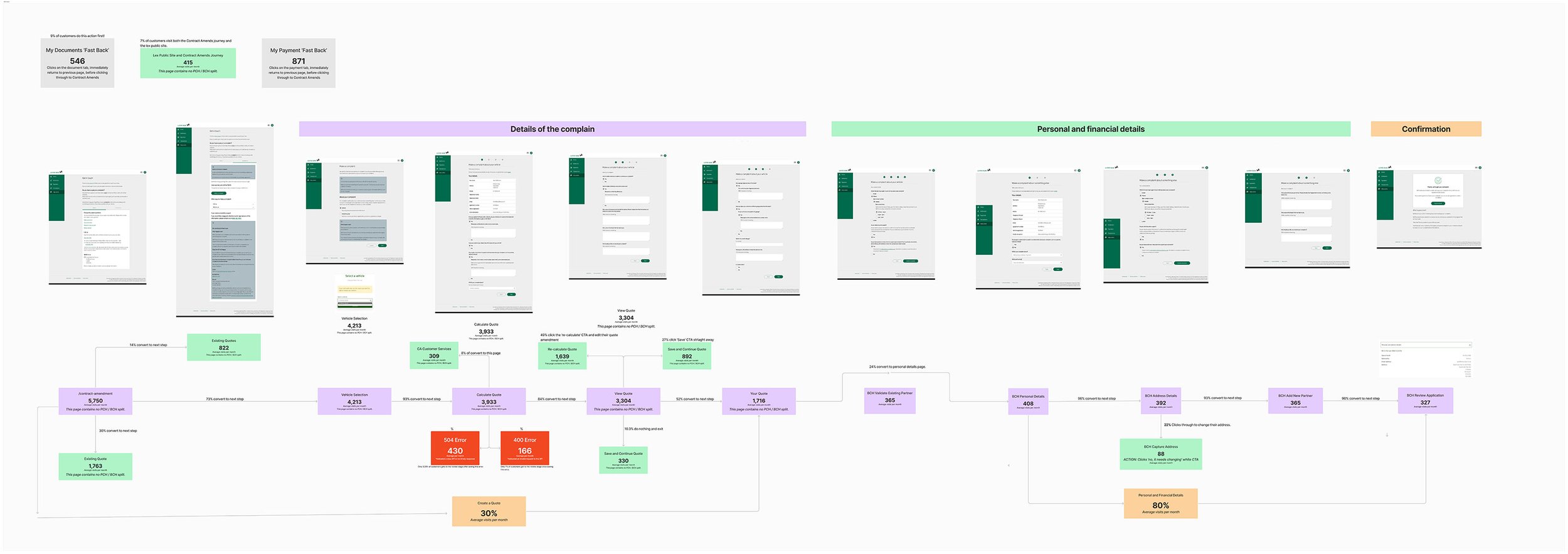
My first task was to map the AS-IS and TO-BE journeys through a service blueprint. I also worked with the analytics team to review data from the legacy platform.
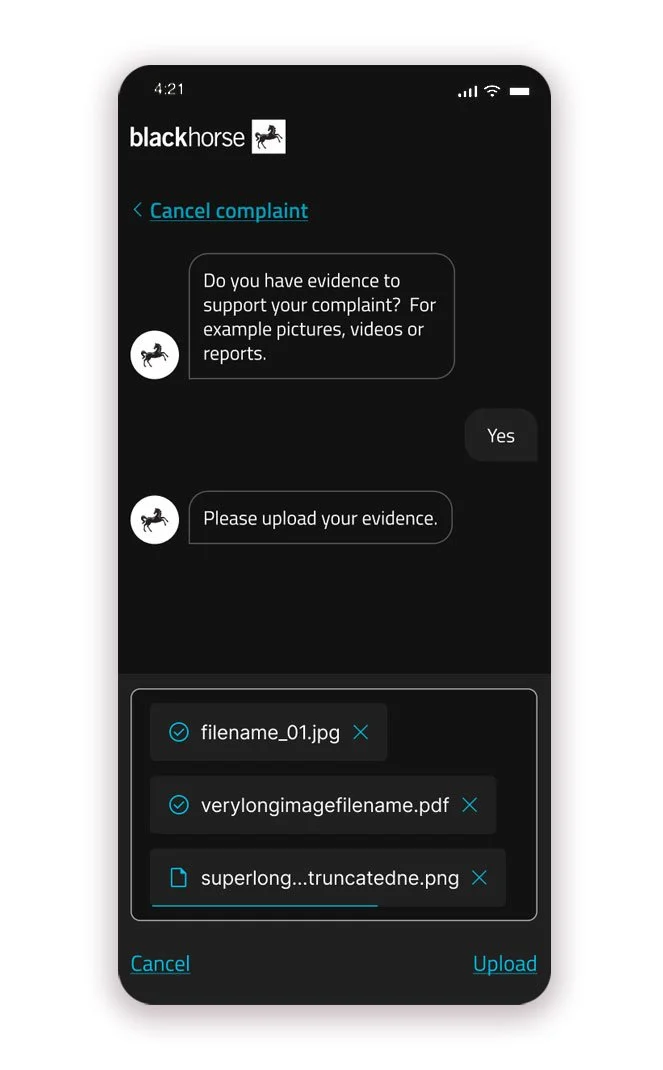
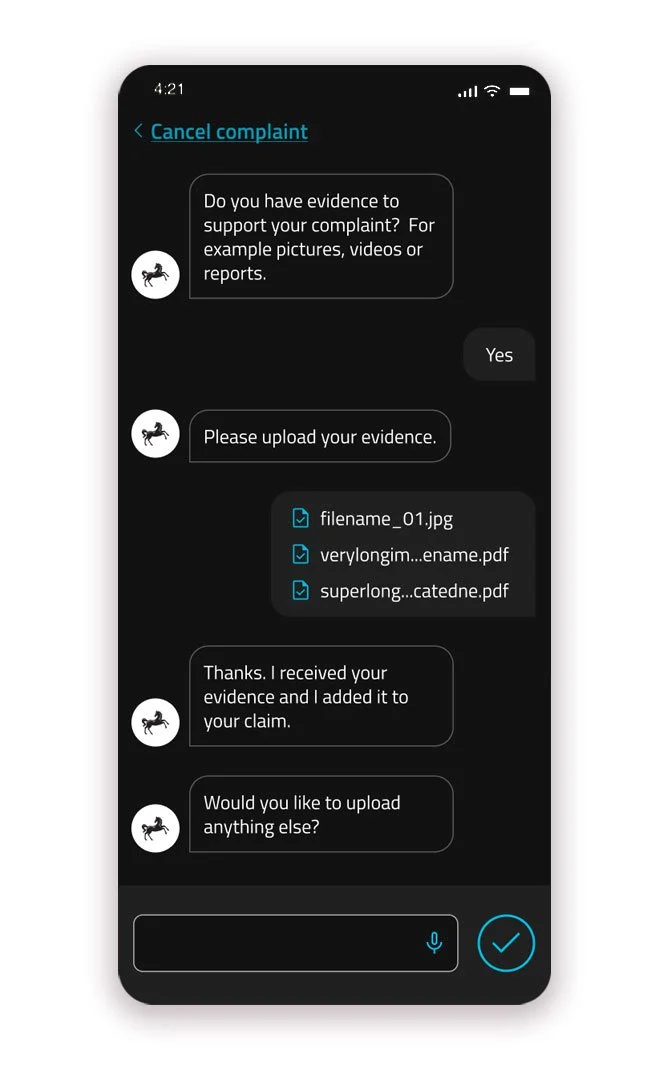
The old 4-page form had a high abandonment rate. It was long, lacked an upload function for evidence, and required customers to send a separate email before submitting—another major drop-off point.
Reimagining the journey
I decided not to simply bring over the old WSS complaints form. After researching competitors and discussing with stakeholders, we agreed that the new experience should use a conversational bot to guide users through the same series of required questions.
The aim was to:
improve customer engagement,
reduce operational strain,
and create a framework for future AI integration.

Powered by Gemini
Gemini was chosen as the LLM since it's already in use across the banking group.
We defined key parameters for the bot, including the types of complaints it handles (e.g. vehicle, service, finance, payments), actions it can take (respond, escalate, refund), and when to involve a human.
To align it with company policy, we provided relevant artifacts like the complaint handling policy, FAQs, escalation procedures, and agent scripts.

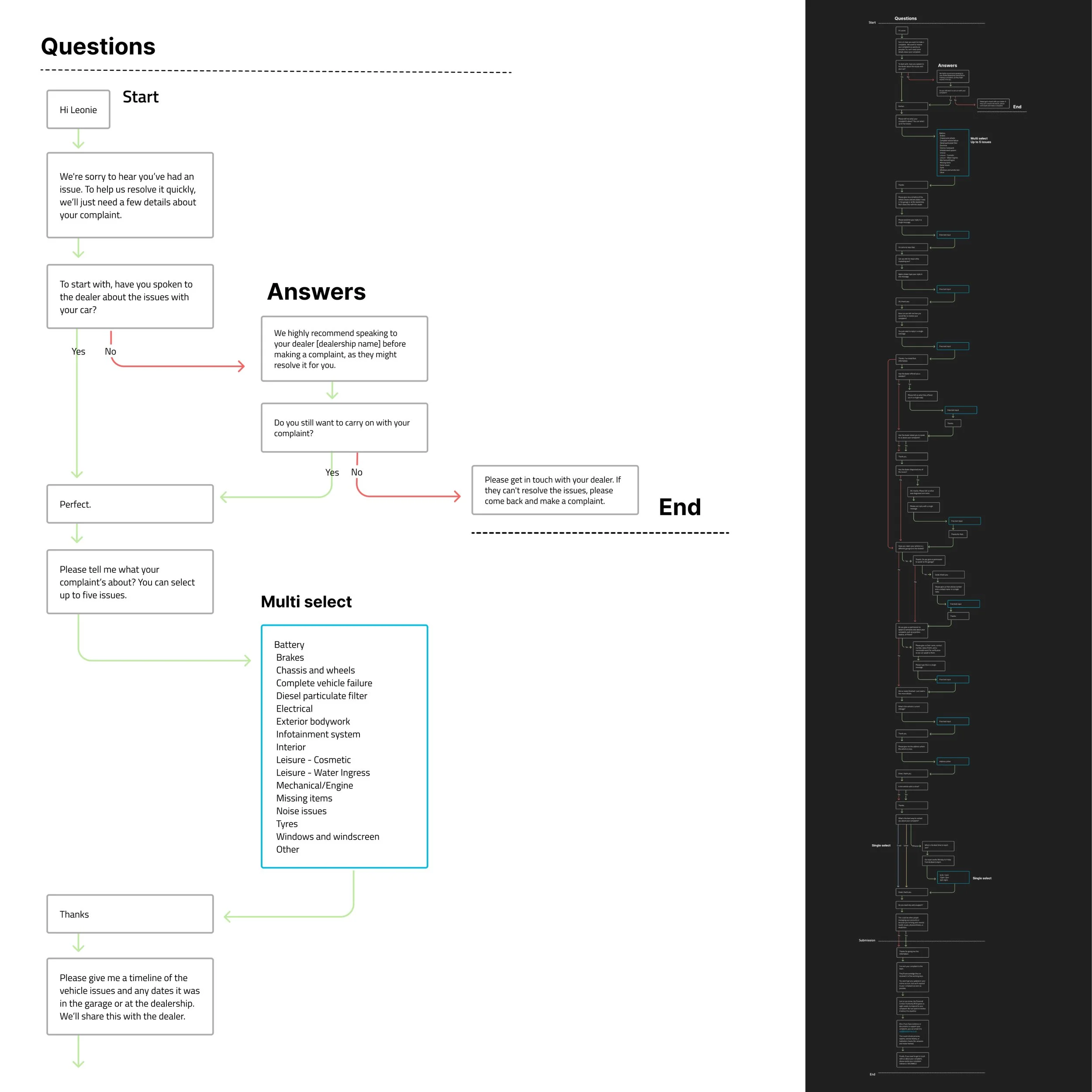
A conditional script to cover different scenarios
I worked closely with the content designer to polish the script structure and make sure it followed the tone of voice and policies of the company.
Components
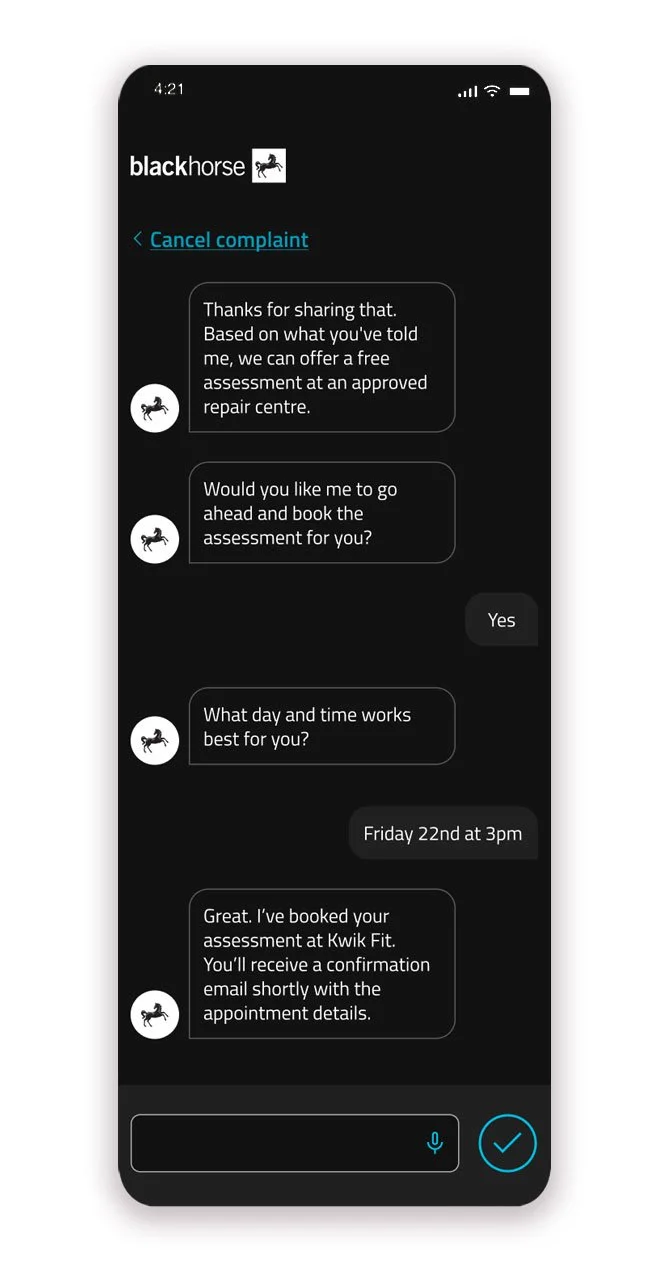
I created new components to support the bot interactions, building on the existing Lloyds bot design. I enhanced it by adding features like voice-to-text to improve accessibility and user experience.

Testing and iteration
Two rounds of usability testing were conducted with real users to validate tone, ease of use, and overall trust. Based on feedback, we refined the bot’s tone to be more empathetic and ensured the interaction felt intuitive and supportive during what can be an emotionally charged task.
Doc upload


Key improvements
Conversational UX: I designed a more empathetic dialogue flow that collected all required information. Conditional logic enabled personalised journeys based on user responses.
System Integration: The bot captures all responses and feeds them into Nucleus, a colleague-facing portal used to manage and review complaints.

Results we're driving toward
Increase completion rate to
70%
Old platform rate was 50%
Reduce complaint-related calls by
90%
within 6 months
Decrease time spent logging complaints from
45min to 0
thanks to automated data capture